Author: Mr Oliver Eaton BSc (Hons), PG.Cert – Orthopaedic Specialist
Reviewed by: Mr William Sharples BSc (Hons) – Pain Management Expert
Last Updated: September 2025
In this article, you will find out everything you need to know about Ischiogluteal Bursitis and the most effective ways to treat it, including an advanced treatment called Prolotherapy.
Table of Contents
What is Ischiogluteal Bursitis?

Ischiogluteal bursitis, also known as “weaver’s bottom,” is inflammation of the bursa located between the ischial tuberosity (the sitting bone) and the gluteus maximus muscle. The bursa acts as a cushion to reduce friction when sitting or moving. When inflamed, it causes pain in the lower buttock, especially when sitting, walking, or climbing stairs. This condition is often mistaken for sciatica or hamstring tendinopathy, but targeted treatment can provide significant relief.
Symptoms
- Pain or tenderness over the sitting bone (ischial tuberosity)
- Discomfort when sitting, especially on hard surfaces
- Swelling or a palpable lump in the lower buttock
- Pain that radiates down the back of the thigh (sometimes mimicking sciatica)
- Stiffness or aching after prolonged sitting or activity
- Difficulty walking, running, or climbing stairs
- Occasional redness or warmth over the affected area
Causes & Risk Factors
- Prolonged sitting, especially on hard or uneven surfaces
- Repetitive activities: cycling, rowing, or running
- Direct trauma: falls or blows to the buttock
- Hamstring injuries: strains or tears near the ischial tuberosity
- Obesity or rapid weight loss
- Arthritis or inflammatory conditions
- Age-related changes
People with sedentary jobs, athletes, and older adults are at higher risk1.
Diagnosis
Diagnosis is based on your symptoms, medical history, and a physical examination. Your clinician may:
- Check for tenderness, swelling, and range of motion in the buttock and hip
- Ask about recent activities, injuries, or changes in sitting habits
- Order imaging (ultrasound or MRI) to rule out hamstring tears or other causes
- Occasionally, order blood tests to check for infection or inflammatory conditions
Early diagnosis and treatment help prevent chronic pain and complications.
Impact on Daily Life
Ischiogluteal bursitis can significantly affect your quality of life. Sitting for work, driving, or social activities may become uncomfortable. Some people avoid exercise or travel due to pain, which can lead to muscle weakness and further joint problems. Addressing the condition early is key to maintaining mobility and independence.
Self-Care & Exercises
Most cases improve with self-care and gentle exercises:
- Rest: Avoid activities that aggravate pain, especially prolonged sitting.
- Ice: Apply an ice pack for 10-15 minutes, 2-3 times daily to reduce inflammation.
- Cushioning: Use a soft cushion or donut pillow when sitting.
- Gentle stretching: Hamstring and gluteal stretches can relieve tension.
- Strengthening: Glute bridges, clamshells, and core exercises support the pelvis.
- Posture: Maintain good posture and avoid slouching.
- Gradual return to activity: Increase activity levels slowly as pain improves.
Sample Exercises
- Hamstring Stretch: Sit with one leg extended, reach toward your toes, hold for 20 seconds. Repeat 3 times per leg.
- Glute Bridge: Lie on your back with knees bent, lift hips, hold for 5 seconds, lower. Repeat 10-15 times.
- Clamshell: Lie on your side with knees bent, open knees while keeping feet together, hold, and return. Repeat 10-15 times per side.
- Standing Hip Extension: Stand, extend your leg backward, hold for 2 seconds, return. Repeat 10 times per leg.
Tip: Avoid high-impact activities and hard surfaces until symptoms resolve2.
Treatments for Ischiogluteal Bursitis
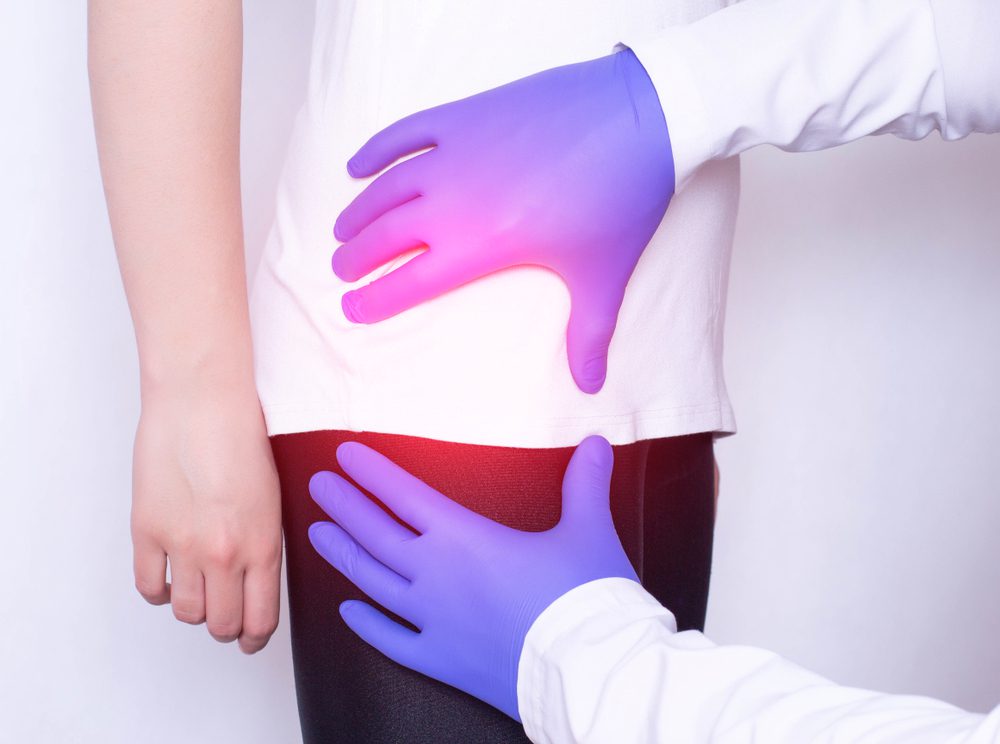
If self-care does not relieve symptoms, additional treatments may include:
- Non-steroidal anti-inflammatory drugs (NSAIDs): For pain and swelling, as advised by your doctor.
- Physical therapy: Tailored exercises and manual therapy to restore movement and strength.
- Corticosteroid injections: For short-term relief in severe cases.
- Shockwave therapy: May help chronic or resistant cases.
- Prolotherapy: See below for details.
- Surgery: Rarely needed, only for persistent or severe cases.
Prolotherapy
In recent years, Prolotherapy has built its reputation within the medical community for its clinically proven ability to treat ischiogluteal bursitis.
Published research has proven its pain-relieving, anti-inflammatory and regenerative benefits3.
Prolotherapy involves injecting a natural regenerative solution with tiny needles. This has been shown to stimulate the production of collagen cells, the small cells needed to help with ischiogluteal bursitis.
As prolotherapy is helping to treat the root cause of ischiogluteal bursitis, it is deemed to be a permanent fix, preventing the symptoms from returning.

Disclaimer: The information provided in this section is for educational purposes only and is not a substitute for professional medical advice, diagnosis, or treatment. Prolotherapy may not be suitable for everyone, and outcomes can vary. Always seek the guidance of a qualified healthcare professional regarding your specific medical condition or treatment options. Never disregard professional medical advice or delay seeking it because of information you have read here.
Case Studies
Case Study 1: Prolotherapy for Chronic Ischiogluteal Bursitis
Background: A 60-year-old office worker with a year-long history of buttock pain and difficulty sitting.
Treatment: After three prolotherapy sessions at ProHealth Clinic, pain reduced by 85% and the patient returned to work without restrictions.
Outcome: At 6-month follow-up, the patient remained pain-free and active.
Case Study 2: Exercise and Prolotherapy Combination
Background: A 45-year-old cyclist with persistent ischiogluteal pain failed to improve with rest alone.
Treatment: After adding prolotherapy and targeted exercises, pain scores dropped from 8/10 to 1/10, and function was fully restored within 2 months.
Outcome: The patient returned to cycling and reported no recurrence at 1-year follow-up.
Case Study 3: Rapid Relief in a Manual Worker
Background: A 52-year-old builder developed acute ischiogluteal bursitis after a fall.
Treatment: Early intervention with prolotherapy and physiotherapy.
Outcome: Returned to work within 4 weeks, with full pain resolution and no further episodes.
Frequently Asked Questions
How long does ischiogluteal bursitis take to heal?
Most people recover within 4-8 weeks with self-care and physiotherapy. Chronic cases may take longer, especially if underlying issues are not addressed.
Is exercise safe with ischiogluteal bursitis?
Yes, gentle stretching and strengthening exercises are recommended. Avoid activities that cause sharp pain or prolonged sitting.
What is the success rate of prolotherapy for ischiogluteal bursitis?
Clinical experience and research show high success rates, with most patients experiencing significant pain relief and improved function3.
Can ischiogluteal bursitis return after treatment?
Recurrence is possible if underlying causes (e.g., poor posture, overuse) are not addressed. Prolotherapy aims to provide a permanent solution by treating the root cause.
When should I see a specialist?
If pain persists despite self-care, or if you have difficulty sitting or walking, see a specialist for assessment and advanced treatment options.
Is surgery ever needed for ischiogluteal bursitis?
Surgery is rarely required. Most cases respond well to conservative treatments, including prolotherapy.
How can I prevent ischiogluteal bursitis from coming back?
Use proper cushioning when sitting, maintain good posture, strengthen gluteal and core muscles, and avoid prolonged pressure on the sitting bones.
Contact ProHealth Clinic Today for Your FREE 15-Minute Discovery Call
Don’t let ischiogluteal bursitis control your life any longer. Join the thousands of patients who have found lasting relief through prolotherapy at ProHealth Clinic.
Get in Touch
- Phone: Call Us Now
- Email: info@prohealthclinic.co.uk
Our Clinic Locations
- London: 104 Harley Street, Marylebone, W1G 7JD
- Manchester: The Hadley Clinic, 64 Bridge Street, M3 3BN
- Bedford: The Village Medical Centre, Kingswood Way, MK40 4GH
All clinics offer the same award-winning prolotherapy treatment with convenient appointment times, including evenings and weekends.
References
- Papadopoulos EC, Khan SN. Ischial bursitis. Orthopedics. 2004;27(2):171-173. View Study
- American Academy of Orthopaedic Surgeons. Bursitis of the Hip. Patient Resource
- Rabago D, Slattengren A, Zgierska A. Prolotherapy in Primary Care Practice. Prim Care. 2010;37(1):65-80. View Study
- Stenhouse G, Sookur P, Watson M. Prolotherapy in the management of musculoskeletal pain: a systematic review. Br J Sports Med. 2013;47(7):379-383. View Study
- Hodgson RJ, O’Connor PJ, Grainger AJ. Imaging of muscle disease: MRI, CT, ultrasound. Semin Musculoskelet Radiol. 2007;11(3):246-260. View Study
Disclaimer: This article is for informational purposes only and does not substitute for professional medical advice. Always consult your healthcare provider before making treatment decisions.